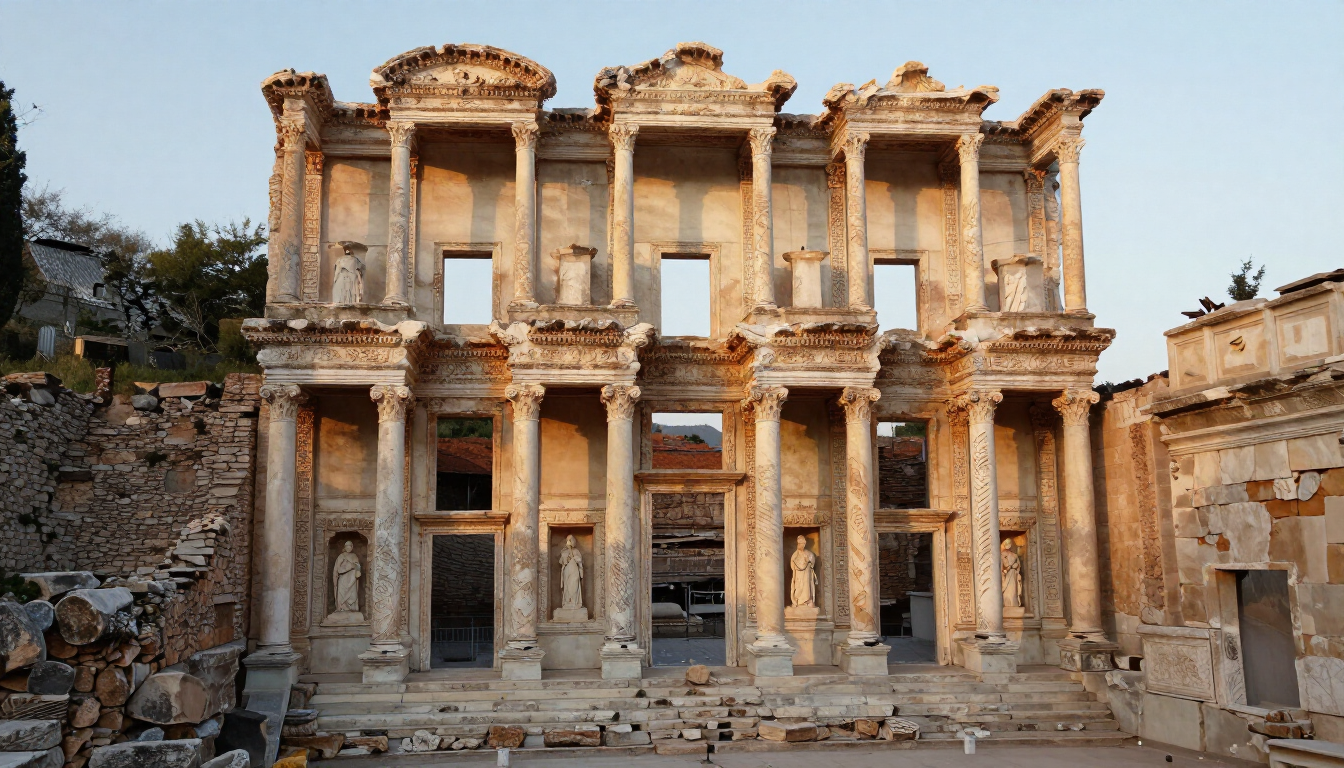
Kunming, Tengchong, Heshun Old Township, Lushui, Dali, Shangrila, Lijiang
We dedicated 12 days to exploring Yunnan, China. During our time, we visited numerous Flying Tiger museums, vibrant local markets, and significant cultural and historic sites.
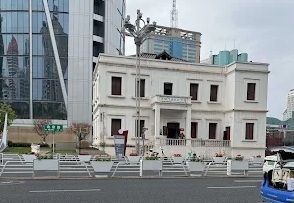
Exterior of the Flying Tiger Memorial Hall museum in Kunming, Yunnan, China.
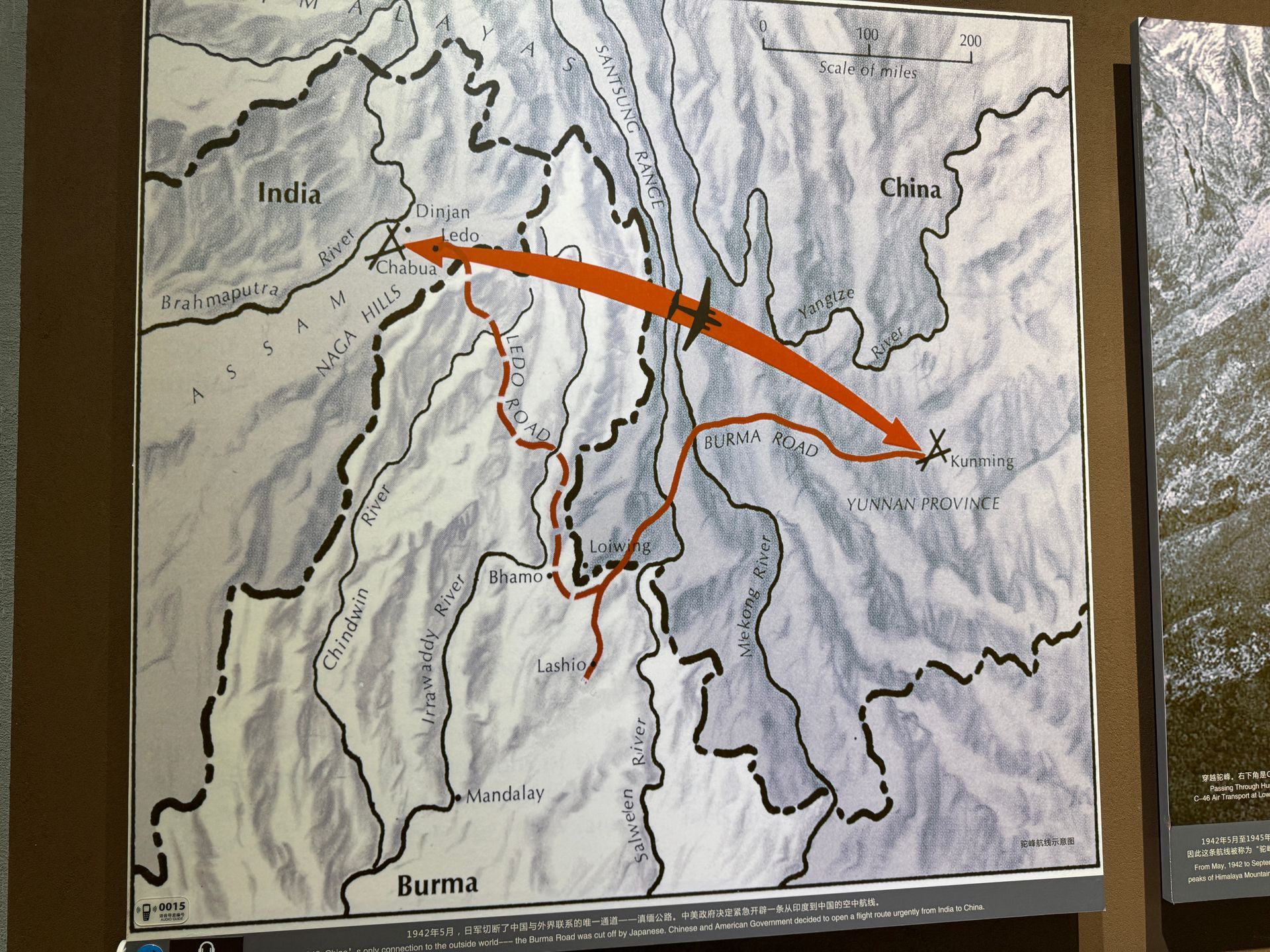
Flying over the Hump and Burma Road
The Flying Tiger Memorial Hall, located in Kunming, serves as a poignant tribute to the courageous men and women of the Flying Tigers, who played a vital role during World War II. This memorial not only commemorates their bravery and sacrifices but also educates visitors about the significant contributions they made to the defense of China against Japanese aggression.
With its thoughtfully curated exhibits and historical artifacts, the hall offers an insightful glimpse into the extraordinary stories of these unsung heroes. A visit to the Flying Tiger Memorial Hall is not just a journey through history but also a celebration of valor and resilience, reminding us of the enduring spirit of those who fought for freedom and peace.
At the end of your visit, you may partake in the Officer's Club.
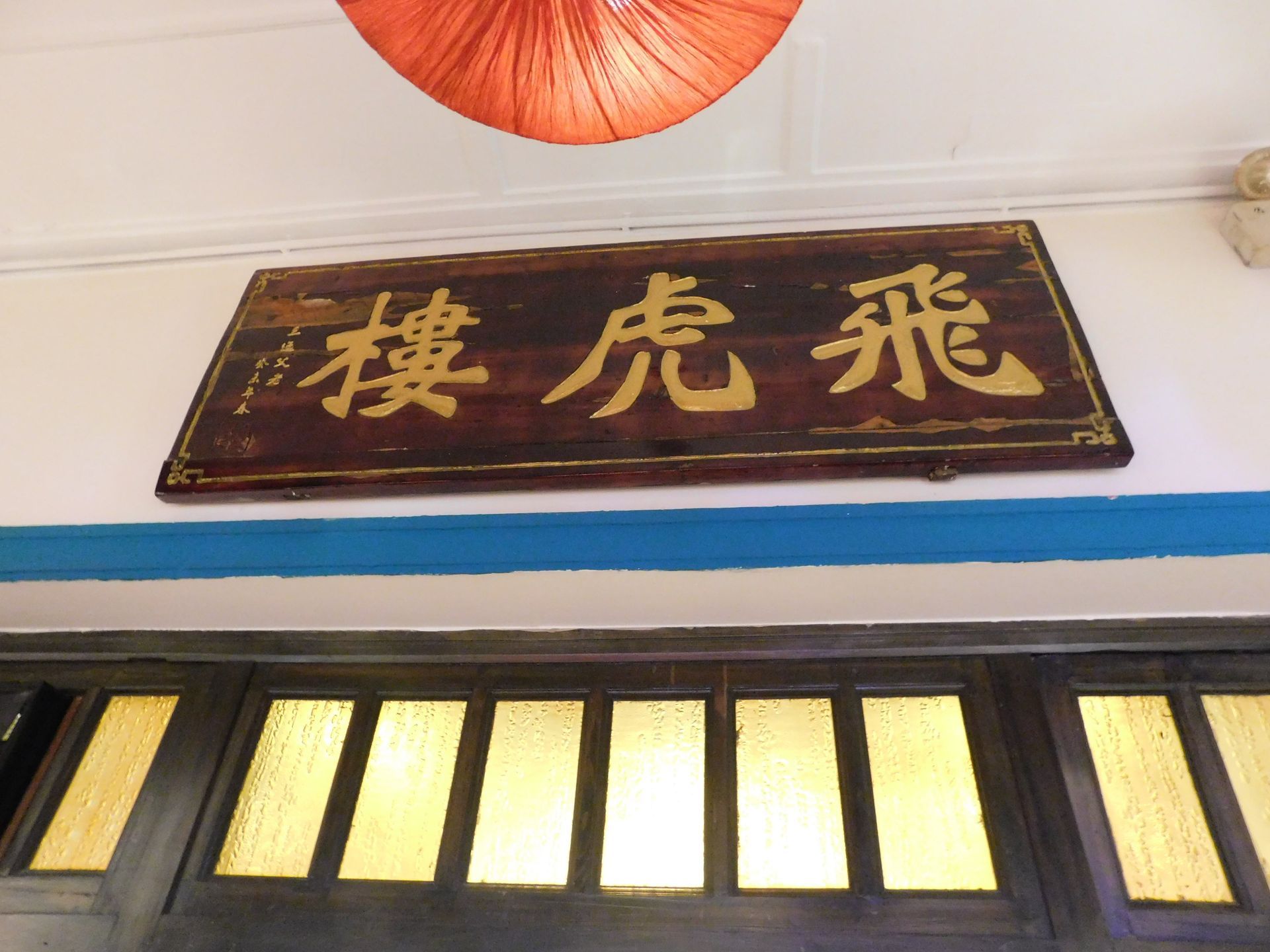
Flying Tiger Restaurant
Flying Tiger Restaurant, located in the picturesque city of Kunming, Yunnan, China, offers a unique dining experience that showcases the rich culinary traditions of the region. Nestled amidst stunning natural landscapes and vibrant urban life, this restaurant combines authentic flavors with a cozy atmosphere, making it a popular choice for both locals and tourists alike. Whether you're in the mood for traditional Yunnanese dishes or innovative fusion cuisine, Flying Tiger Restaurant has something to satisfy every palate.
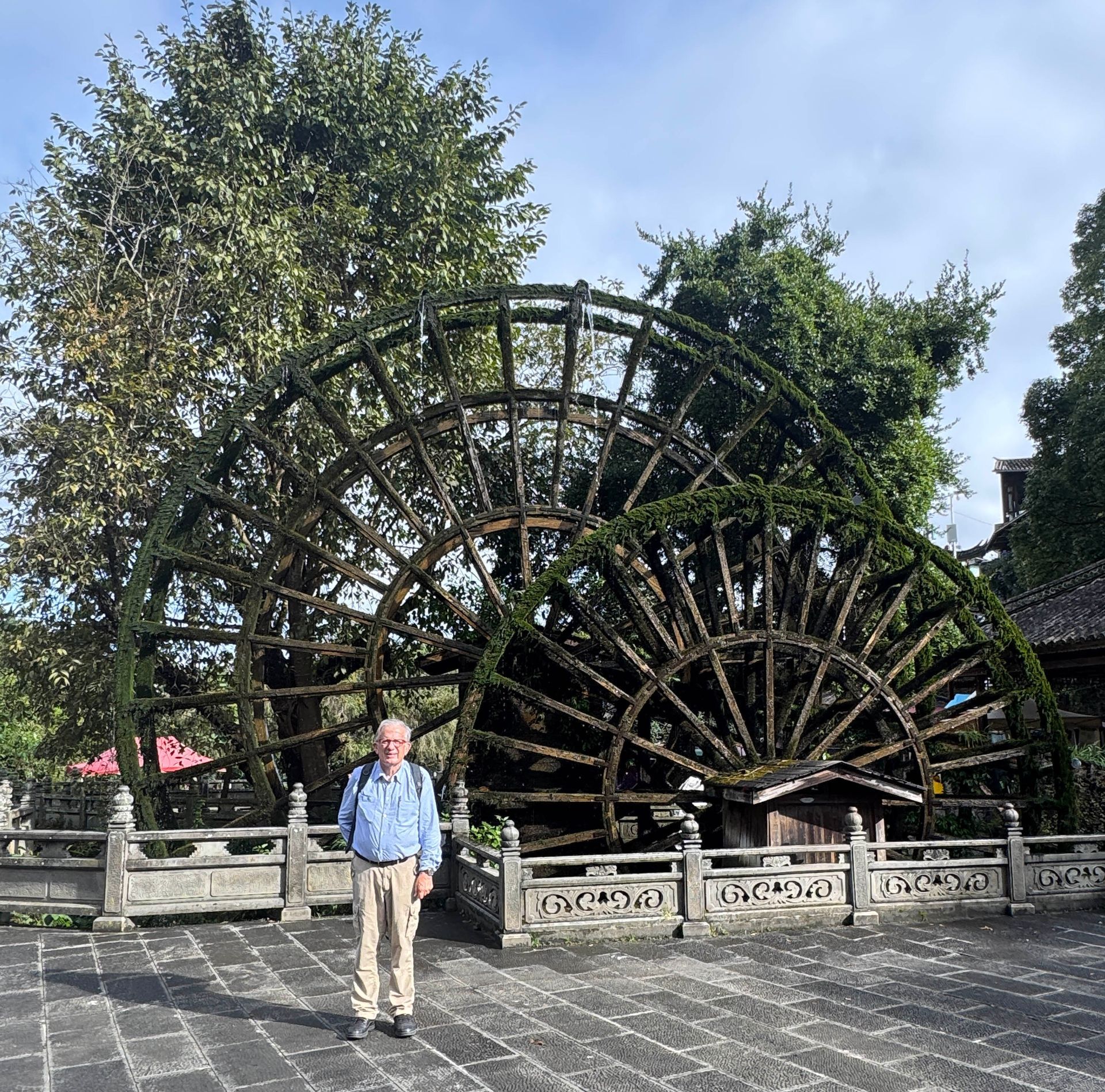
Heshun Town is a historic locale situated in Tengchong City, just four kilometers southwest of the city center in Yunnan, China. Originally named Yangwendun, the town was later renamed to Heshun, a title it continues to hold today. Heshun is renowned for its traditional quadrangle courtyards, which are seamlessly integrated into the surrounding hills.
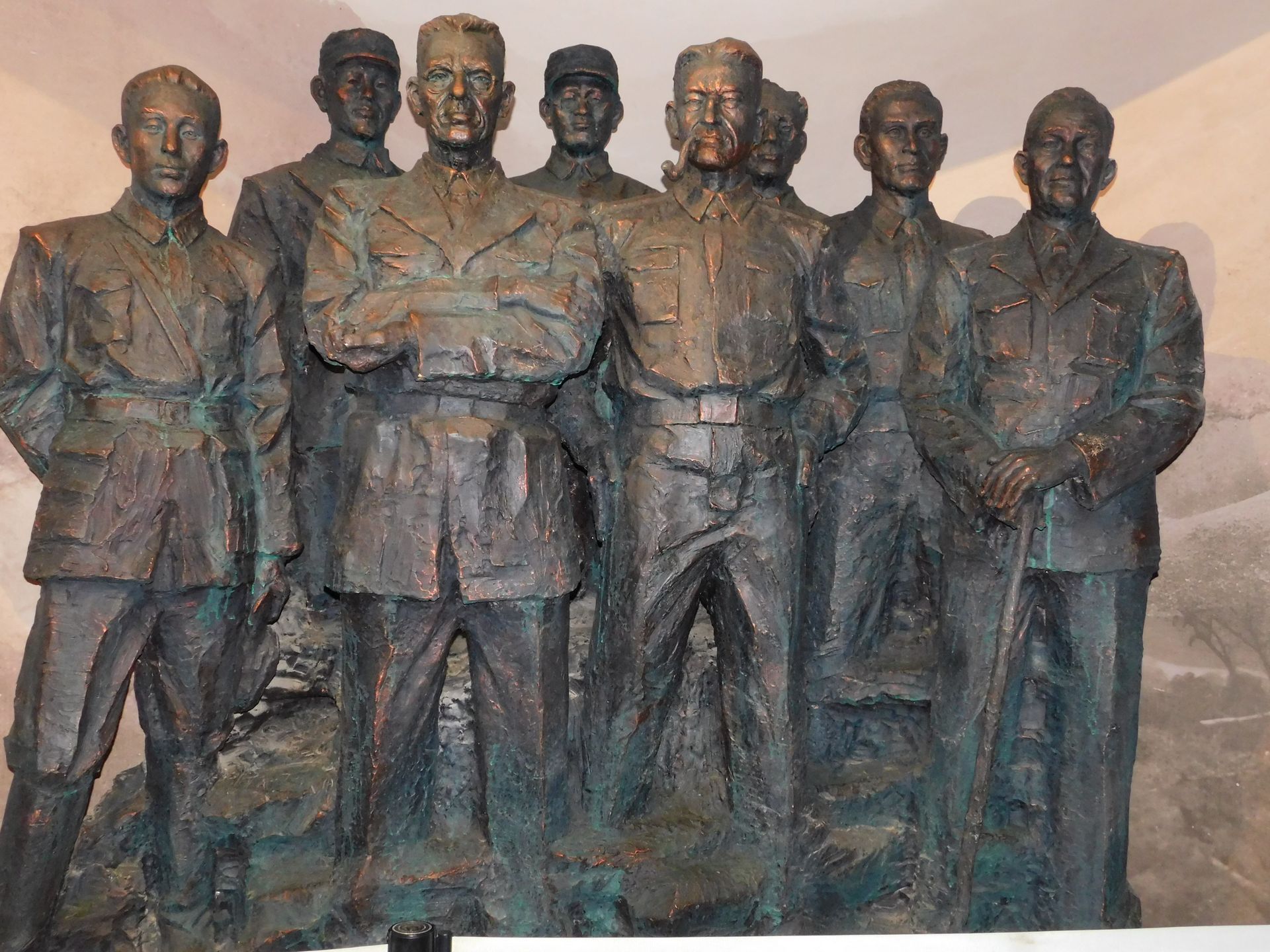
The Generals
Graveyard of the National Heroes
Stilwell Road Museum and the Dianmian Anti-Japan War Museum
National Heroes Cemetery in Tengchong
Diorama of "The Hump"
Tengchong, a picturesque county located in the Yunnan province of China, is renowned for its stunning natural landscapes and rich cultural heritage. Nestled amid rolling hills and lush greenery, this charming destination boasts a unique blend of history and scenic beauty. Visitors to Tengchong can explore its ancient architecture, including impressive temples and historical sites that reflect the region's diverse cultural influences. The area is also famous for its hot springs, offering a relaxing retreat and a chance to experience the natural thermal waters that have drawn travelers for centuries. With its mild climate and breathtaking views, Tengchong is truly a hidden gem waiting to be discovered by travelers eager to experience the beauty of Yunnan province.
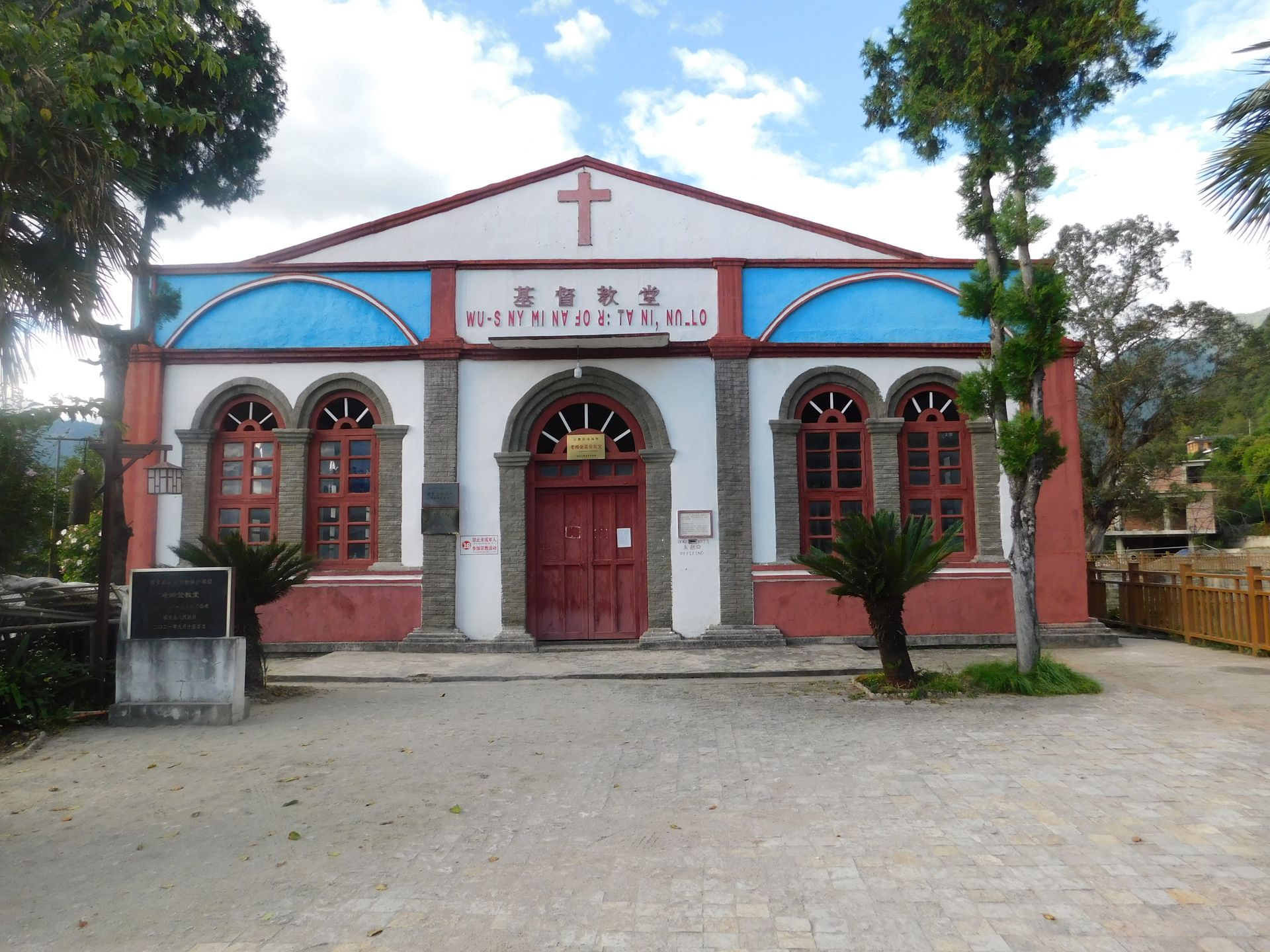
https://www.tripadvisor.com/Attraction_Review-g1795655-d1831437-Reviews-Laomudeng_Christian_Church-Gongshan_County_Nujiang_Lisu_Autonomous_Prefecture_Yu.html
Venturing into the Nu ethnic township of Pihe in Fugong County, one is likely to be taken aback by the Laomudeng Christian Church, the largest church in the breathtaking Nujiang Grand Canyon of Northwest Yunnan.
The local Nu community, residing along the banks of the Nujiang River, has become accustomed to participating in services at the Christian churches that were established by Western missionaries in the 1920s.
In the Nujiang Canyon, where diverse ethnic groups—including the Nu, Lisu, Bai, Han, and Tibetan—share a common Christian faith, various religions coexist harmoniously, encompassing traditional beliefs, Dongba Religion, and even Tibetan Buddhism.
The famous Laomudeng Church sits in the Salween Valley, serving Nu Christians there. "Laomudeng" is from the Nu ethnic language and means "a place people like to visit." It is located in Laomudeng Village, Pihe Township, Fugong County, Nujiang Lisu Autonomous Prefecture, Yunnan Province. Fugong County is an arctic-alpine mountain area where mainly Lisu live together with Bai and Nu people.
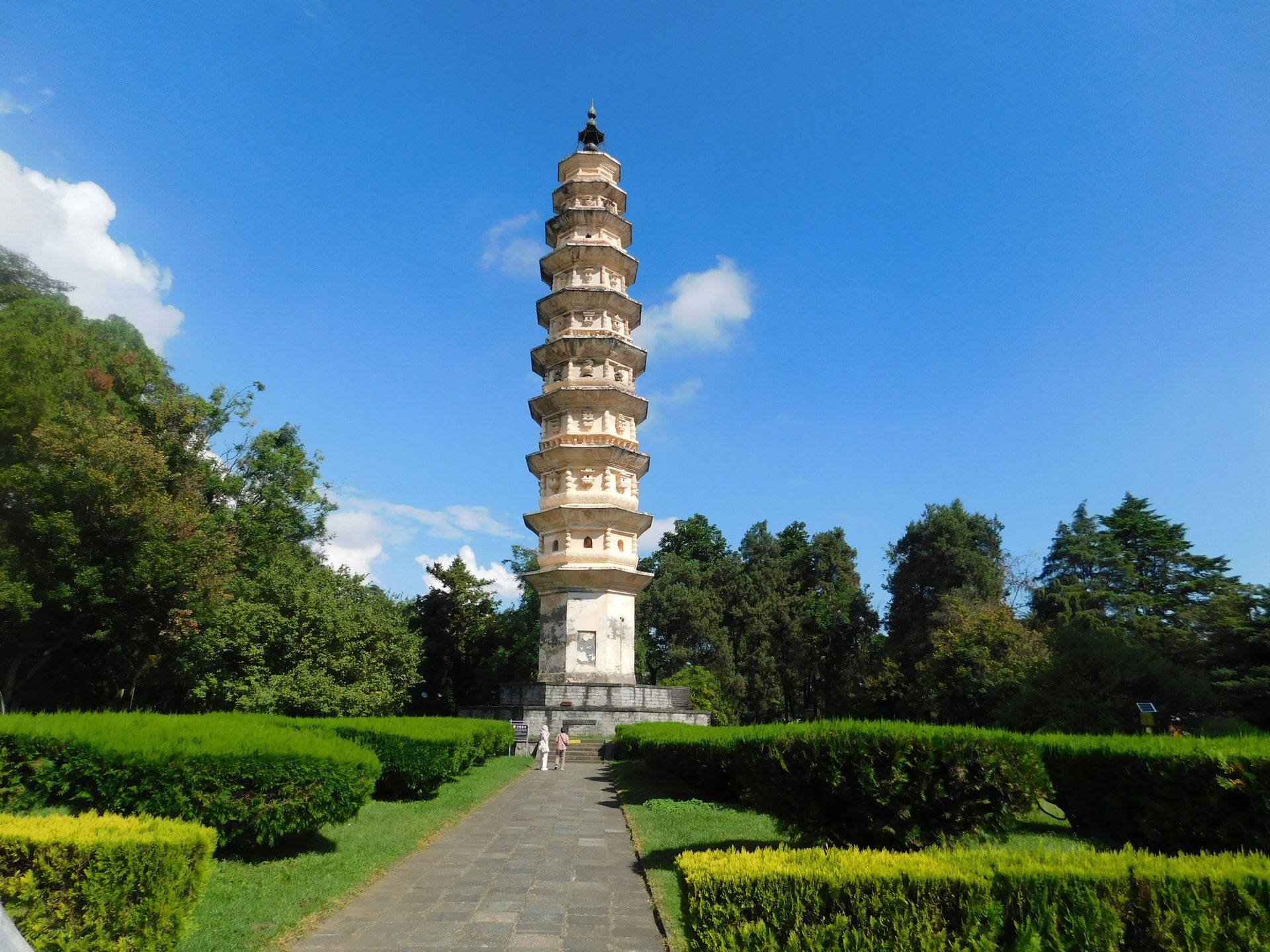
Pagoda in Dali
Dali Reflecting Pool
Dali Temple Complex
Dali Three Pagodas
Road to Dali
Bridge over the Mekong
Under the Bridge
Dali, Yunnan, Erhai Lake
Dali, a picturesque city located in Yunnan Province, China, is renowned for its stunning natural beauty and rich cultural heritage. Nestled between the majestic Cangshan Mountains and the serene Erhai Lake, Dali offers visitors a unique blend of breathtaking landscapes and fascinating history. Known for its charming old town, traditional Bai architecture, and vibrant markets, Dali attracts travelers from around the world who seek to experience both its scenic vistas and its rich local traditions. Whether exploring ancient temples or enjoying the vibrant local cuisine, Dali provides an unforgettable experience steeped in the essence of Yunnan's diverse culture.
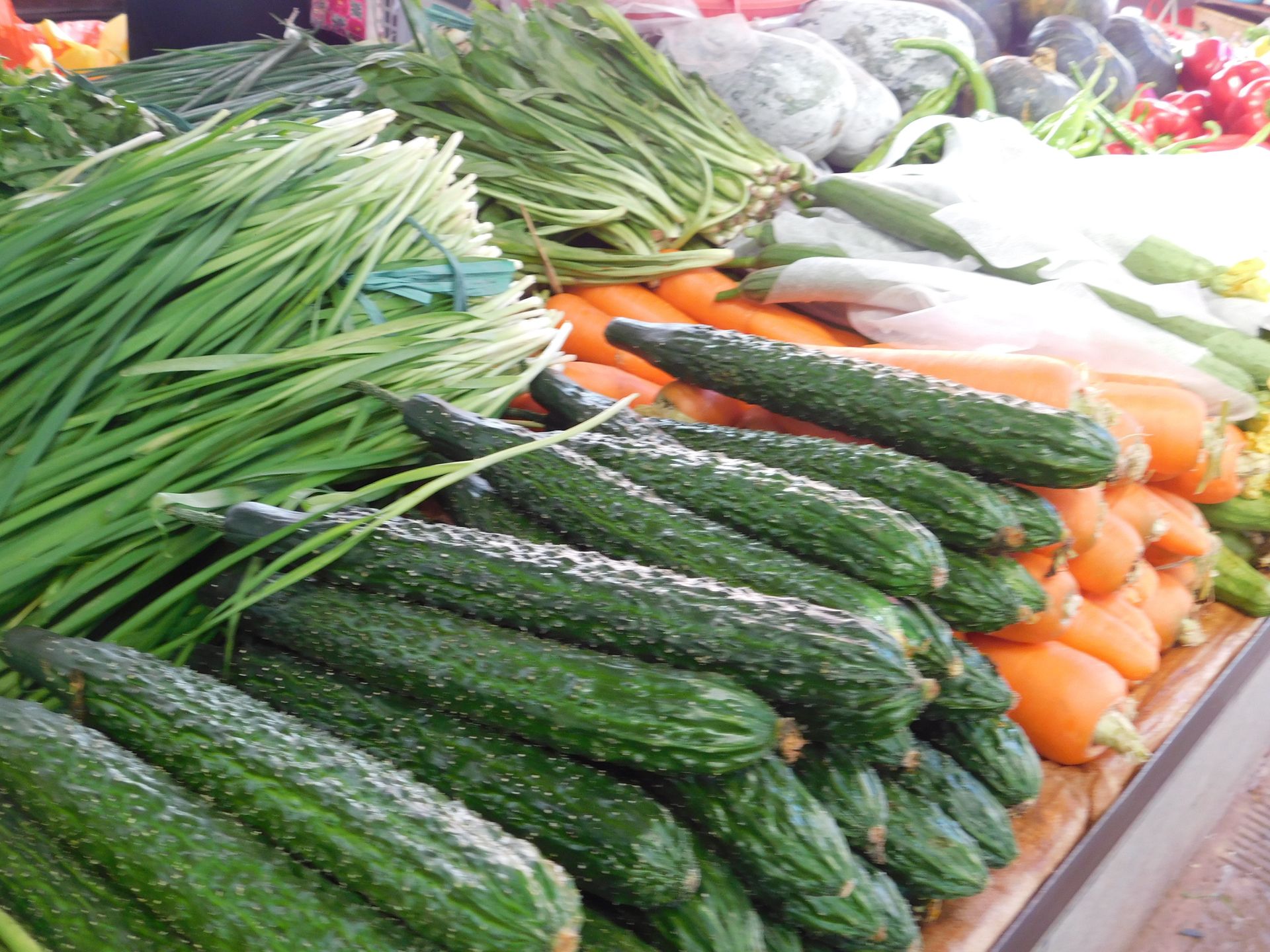
The vibrant morning market in Xizhou, Yunnan, near Dali, kicks off around 8 a.m. in Xizhou Ancient Town. Here, local farmers and fishermen showcase their fresh produce, including seasonal vegetables, fish, and eggs, providing a genuine glimpse into Bai culture. You can further enhance your cultural experience by wandering along Sifang Street, a historic trading center, and savoring local treats like Xizhou Baba. My big purchase was a glass of Pomegranate juice.
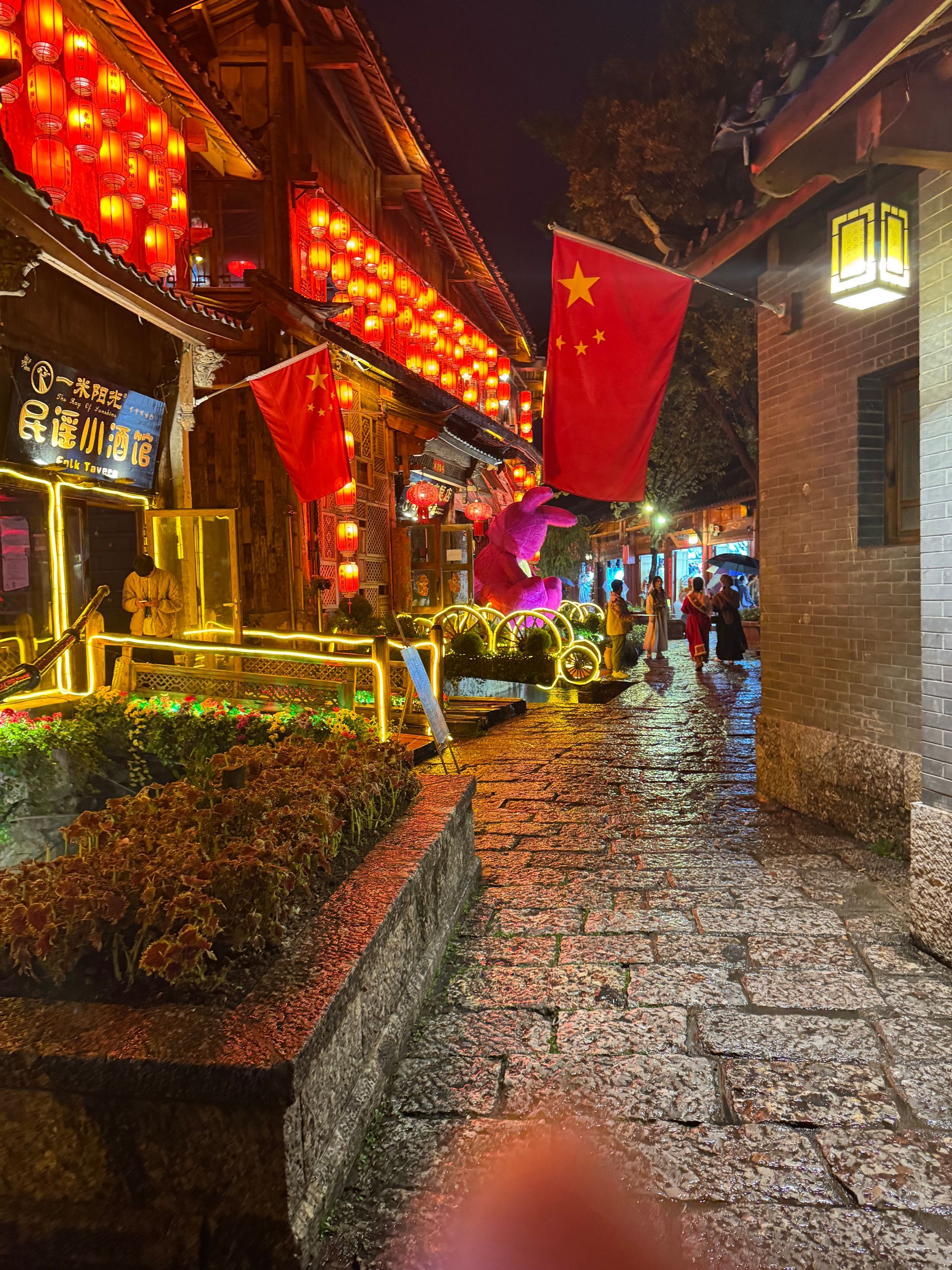
Lijiang
Lijiang at Night
Colorful Yunnan
Entrance to Black Dragon Pool Park, Lijiang
Black Dragon Pool Park
Lijiang, situated in the northwestern region of Yunnan Province, China, is a UNESCO World Heritage Site renowned for its breathtaking natural landscapes and rich cultural history. Positioned at the base of the snow-capped Jade Dragon Snow Mountain, the city is inhabited by the Naxi people, whose ancient Dongba culture and matrilineal traditions continue to flourish. The Old Town of Lijiang, characterized by its maze of cobblestone paths, serene canals, and traditional wooden courtyard homes, embodies a beautiful fusion of Han, Tibetan, and Naxi influences. Visitors can wander through the enchanting Black Dragon Pool, savor sweeping views from Lion Hill, or discover nearby ancient villages like Baisha and Shuhe. With its blend of stunning scenery, traditional architecture, and vibrant local culture, Lijiang presents a timeless insight into China’s diverse heritage.
Much like Venice, it's easy to lose your way here. Having a phone with GPS proves to be incredibly useful. Lijiang also boasts familiar fast-food chains like Pizza Hut, McDonald's, and KFC. However, most of Old Town has turned into a collection of tourist shops. Locals can rent out their properties and find more affordable housing in the nearly two-million population of the city.
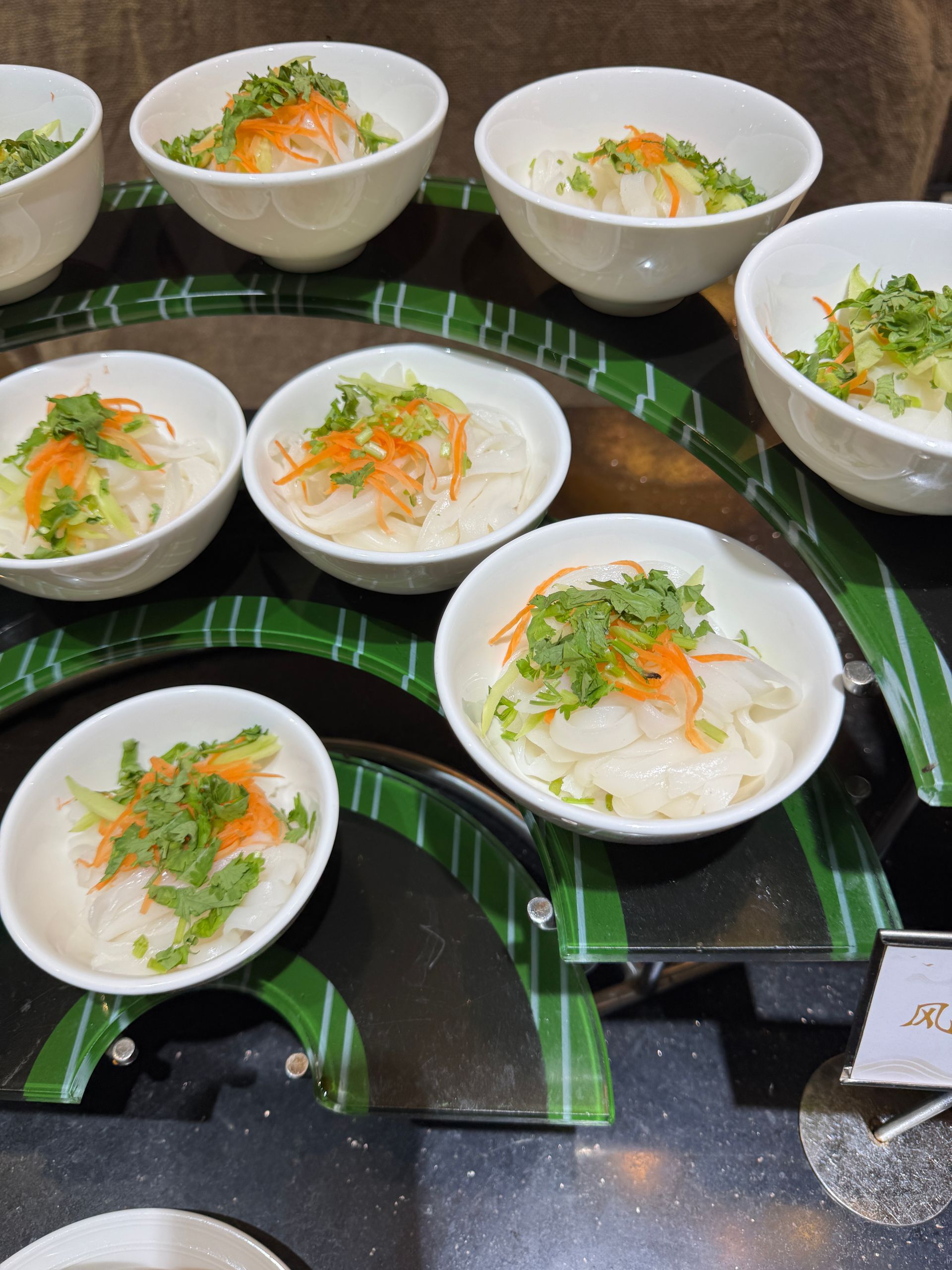
Here's a brief glimpse into the culinary delights of Yunnan, China. This region is known for its delicious rice noodles served in soups, along with a delightful array of subtly spiced dishes. For breakfast, I enjoyed salads and fried eggs. A prominent feature in many restaurants is the lazy Susan, which conveniently allows diners to share dishes. Each table is typically equipped with two sets of chopsticks—one designated for taking food from the lazy Susan and the other for enjoying your meal.
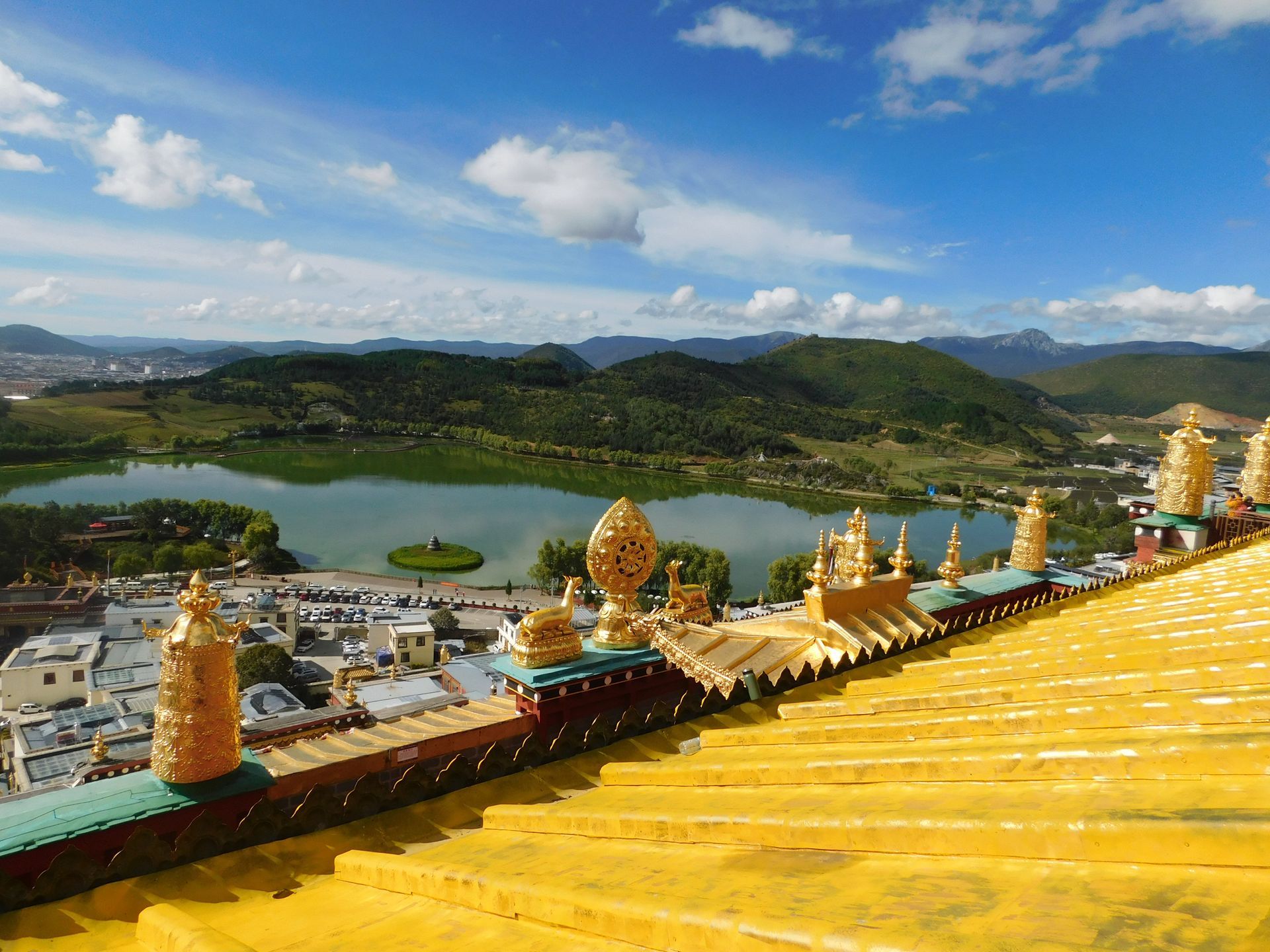
View from Monastery after a climb of 150 steps.
Shangrila Meadows
Songstam Lodge
Songtsam Retreat at Shangri-La
Shangrila. Shangri-La, located in the northwest corner of Yunnan Province, China, is a breathtaking destination where Tibetan culture meets stunning alpine scenery. Perched at over 10,000 feet, this mystical town—once known as Zhongdian—was renamed after the legendary paradise described in James Hilton’s novel Lost Horizon. Visitors are enchanted by its snow-capped peaks, deep gorges, and pristine lakes such as Shudu and Napa. The old town features traditional Tibetan architecture, prayer flags fluttering in the wind, and the magnificent Ganden Sumtseling Monastery, the largest Tibetan Buddhist monastery in Yunnan. With its blend of natural beauty, spiritual serenity, and cultural richness, Shangri-La truly feels like a gateway to the fabled “roof of the world.”
In Shangrila, we enjoyed Yak meat, savored Yak butter tea, and indulged in a pizza. At an elevation of 12,000 feet, we took Acetazolamide to prevent altitude sickness. We wisely hired a van to take us to the top of the Monestary, however we still had 150 stairs to the very top.
Wild Yunnan China
We departed from El Paso, TX, bright and early to catch our 10:30 AM flight from DFW to PVG (Shanghai). Upon our arrival in Shanghai, we presented two passports—our new ones along with our old ones containing our China Visa. It was seamless; they snapped our photos, which synced effortlessly with their system. On a previous visit to China a photo and fingerprints were taken. So we were already in the Chinese automated system, so no fingerprints were needed this time.
By late afternoon, we wanted to avoid arriving in Kunming after dark, so we opted to stay at the Airport Holiday Inn Express for just under $110. Finding it was surprisingly straightforward; we simply followed the signs directing us to “Hotel.”
TThe following morning, we made a quick journey back to the terminal for our flight to Kunming. Upon arrival, we checked into the Kai Wai Plaza hotel, a striking 30-story edifice, where we settled into our corner room boasting a spectacular view. For lunch, we treated ourselves to a local specialty—hot pot chicken soup. It was served alongside a bubbling bowl of chicken broth and a checkered tray filled with nine assorted meats and vegetables for us to select and cook in the pot. Moreover, a bundle of rice noodles, a beloved staple in this region of China, was included for us to add to our meal.
Next, we set off for the Flying Tiger Memorial Hall, one of several Flying Tiger Museums in Kunming, Yunnan, China. This site served as the headquarters for the AVG during WWII. Notably, Tom Lea, the renowned WWII correspondent, stopped at this airbase before his flight to Chongqing and then back to Kunming, ultimately heading to Guilin back to Kumning and then over the Hump to India.
The museum featured numerous photographs, artifacts, and displays. In the Officer’s Club lounge, we viewed archival films showcasing Yunnan, including footage on the construction of the Burma Road, which stretched from India over the Hump to Lijiang, Dali, and finally Kunming. Many supplies were transported over the Hump or by truck, and it was perilous, as the trucks operated without lights at night. For pilots, navigation relied on visual cues, presenting risks due to the towering peaks and cloud cover. We took a moment to relax in the officer’s club.
We made a brief stop at the Kunming Museum, which showcased a display about the Burma Road along with various artifacts from the Flying Tigers during WWII. Dinner followed at the Flying Tiger Restaurant, which doubled as a museum.
We then traveled to Tengchong, where we checked into the Guangfang Hotel. Our next adventure took us to Heshun Township, affectionately known as an “Old Town.” It was picturesque by the water, and we paused at the water wheel for some photos. The area offered plenty of leisurely walking paths. Inside the park, we hopped on a tram to reach the top and then leisurely descended through the charming cobblestone streets. Once again, we enjoyed Hot Pot for lunch, this time featuring quail eggs among the ingredients.
Upon our return to the hotel, we enjoyed the thermal pool, fed by natural hot springs, which opened at 3:00 PM. It seems they drain the pool each night, leaving it empty by morning.
After checking out, we made our way to The Hump Airline Memorial Hall and the Graveyard of National Heroes. The diorama depicting “The Hump” showcased the daring nature of the pilots.
Later, we visited the Hot Sea, a thermal park considerably smaller than Yellowstone. Our guide informed us that they once had a battery-powered car to transport visitors to the top, allowing a downhill walk to observe the geysers, bubbling springs, and steam. However, this was no longer the case. We descended about 50 meters over a half-mile stretch before navigating a series of long switchbacks that required an elevation gain of at least 250 meters. Considering the current altitude, the uphill trek, and the restroom facilities, I would recommend skipping this destination.
Back at the hotel, the buffet pleasantly surprised us with its quality. I enjoyed a small steak that was quite tasty after I scraped off the pepper sauce. To my surprise, this was the only place we encountered sushi, despite our distance from the ocean.
This day was one I regretted not skipping. Our hosts expressed interest in exploring the Nujiang River for a potential bicycle tour. The highlight of the day was the Laomden Christian Church, majestically positioned on a hillside in Fugong County. An elderly gentleman held the keys and graciously opened the church for our visit. We returned to the hotel at 7:00 PM, but he hoped we would go out for a special dinner at 7:30 PM. I politely declined, as I could never subject clients to an 11-hour van ride.
Another long day we concluded our day in Lushui. We stopped at a enormous suspension bridge to admire. Later we checked into the Hilton Garden Inn. The menu featured what we consider traditional Chinese dishes, which was a pleasant surprise, along with a selection of American cuisine. However, I struggled to operate the TV and had to call the concierge for assistance.
Later in the afternoon, we made our way to Dali, starting our exploration at the Three Pagodas Temple complex. A battery-operated car took us up the mountain, providing breathtaking views of Erhai Lake. The temples dotted the landscape, their presence accompanied by the fragrant scent of incense. After visiting several temples, we rode the battery car back down. I mentioned to our guide that we had overlooked the reflecting pool, so we hiked back up to capture photos featuring the Three Pagodas against the tranquil backdrop of the pool.
Arriving in Dali late in the day, we found the Landscape Hotel perfectly positioned in the heart of the old town. Choosing to forgo dinner, we wandered through the numerous shops in search of the Bad Monkey Bar, which I had fondly remembered from my visit in 2011. Unfortunately, it did not show up in Google searches, which has limited reliability in China, but Apple Maps proved more helpful. Upon returning to our hotel, one of our travel companions mentioned he had successfully located the Bad Monkey Bar. Perhaps next time…
The following morning, we headed to Xizhou for the local market and then on to Shaxi, with a stop at the Stone Temple, the largest Buddhist grotto in Yunnan. The visitor area featured an extensive toilet complex with squatty potties. After waiting for the battery car, we began our ascent up the mountain. Once we reached the trailhead, we discovered the path descended steeply for about two miles toward the grotto. Not wanting to face a 200-meter elevation gain on the way back, I enjoyed a leisurely walk along the relatively flat hilltop, taking in the views.
We continued our journey to Xizhou and explored the local market, where my notable purchase was pomegranate juice. The vibrant shops displayed a variety of goods, many specializing in Puer tea. We already had some from the generous gift of our tour leader, Tony Deng. The produce section was remarkable, captivating me enough to snap numerous photos. The ancient town maintained a charm that felt less commercialized compared to Dali or Lijiang, our previous stop. There was a woodworking shop and several vendor stalls, and remarkably, the vendors simply left everything on their tables overnight. Early the next morning, we enjoyed browsing the booths without a vendor in sight—what incredible trust these people have.
The next stop is Shangri-La, with its mystical name evoking a land of peace and tranquility, is a must-visit destination in Yunnan at 12,000 feet above sea level. Shangri-La is nestled high in the Himalayan foothills, it offers breathtaking scenery, a rich tapestry of Tibetan culture, and a serene atmosphere that makes it a true escape from the hustle and bustle of modern life. There were many shops and restaurants in the old town. One restaurant just served bugs. We found a pizza place. We had Yak meat for lunch passed off as beef by our guide, who evidently did not know the difference. It tastes like beef but the spices were unusual to my palate.
We went to the Songzanlin Monastery. Our guide told us we need to walk up 600 steps to see it. I told him the last time I was here were dropped off at the top by vehicle. I was ready to take a pass and then the cab ladies asked if we wanted a lift to the top? Of course. It seems since the reorganization of the temple complex only native Tibetans can operate within the complex. We took the van to the top. And then Tony springs this climbing another double set to 60 stairs to the overlook. Remind you we are at 12,000 feet.
We embarked on a tour of the Songstam Lodge, situated behind the Songzanlin Monastery Temple Complex. As we made our way, a guard diligently checked our temple tickets. The Lodge features an expansive collection of stone buildings, all crafted in Tibetan style, with a delightful dining room and bar that offer picturesque views of the rear of the temple. The dining establishment serves a delectable mix of Chinese, Tibetan, and Western cuisine, complemented by a coffee shop that boasts a charming patisserie. The rooms are outfitted with Tibetan-style beds, elegant showers or tubs, cozy wood stoves, and stunning views of the temple. The exterior doors are draped with hides to keep out the chill.
Our Tibetan-style hotel in Shangrila provided supplemental oxygen in our rooms during the evening. The staff would inquire about our bedtime, and the maid would knock on the door to activate the oxygen system. This was especially helpful given the four flights of stairs—12 steps each—that we needed to climb to access our room. We informed Tony, “This place is off the list for future clients.”
After a tiring ascent of 100 steps (I could have throttled Tony), we ventured to a nearby hotel for breakfast. We took a quick look at some street-side rooms, which appeared far superior to our accommodations. Upon returning to our van, we enjoyed a lift from the hotel to ground level, followed by a short stroll of about 50 yards slightly downhill to reach our vehicle.
Next, we headed to a Tibetan village. The houses typically have stables on the ground floor, with living quarters above. On the upper levels, we noticed several greenhouses, as well as wood stoves or fireplaces. These spacious homes are often shared by multi-generational families.
Our journey took us to Tiger Leaping Gorge, which has transformed from a challenge for the adventurous into a sprawling set of parking lots catering to the influx of tourists. Since our visit in 2011, the Chinese have installed approximately eight extensive escalators, one for each direction of travel. Previously, visitors had to descend 1,400 stairs to reach the bottom and then climb back up. Back in 2011, when I was younger, I appreciated the convenience of the escalator, although it also attracted large crowds of Chinese tourists. Naturally no western toilets.
On our journey to Lijiang, we made a stop at an impressively clean gas station complex, which, of course, featured traditional squatty potties. We then checked into the Kasion Hotel, which is advertised as a 5-star establishment but might be a bit oversold. The hotel was quite nice, although the television only offered Chinese programming, and only an electrical engineer could decipher its operation. Soon after, we headed to Jade Dragon Snow Mountain Park. On a clear day, one can capture stunning photographs with the mountain mirrored in the pool. Unfortunately, the sky was overcast, and the pool was being cleaned in a manner reminiscent of standard swimming pool maintenance.
We were joined by a local guide for a tour of Old Town. She shared fascinating insights into the ancient rules governing the usage of the water that flows through the town. Lijiang is a beautifully preserved ancient Chinese town, rich with cultural essence. Walking along the 800-year-old bridges and waterways of the famed Old Town district feels like a journey through time, though it is now largely populated by shops and restaurants. That evening, Tony finally stumbled upon an amazing restaurant. I indulged in a delightful meal primarily featuring shrimp and duck but decided to pass on the Chinese Fire Water. During dinner, I received an unexpected text.
Our flight to Shanghai the following afternoon was delayed by two hours, which would significantly reduce our transfer time in Shanghai. I spent the entire night debating what to do. After an early breakfast, we approached the concierge and requested to head to the airport immediately. “But sir, you’re scheduled for 10:00 am.” Using my translator app, I explained that we needed to find an earlier flight. Once at the airport, we joined the Spring Airlines line, and after 10 minutes, we reached the front. However, our attempts to explain the situation to the agent were futile. A Chinese woman, whose title I did not know, overheard us and kindly guided us to a different counter where we could book a ticket on an 11 am flight with another airline. I texted Trip.com and selected the cancellation option (that flight is now delayed by 3 hours) with a full refund. The woman checked our bag at the “Priority” counter. We had just 45 minutes left to board, and she politely refused a tip, despite my efforts. Off we went to Shanghai. The journey was smooth; our bags were the first to come off the plane! We stopped at McDonald’s between terminals. There was minimal walking, and we were thrilled to see the American Airlines counter.
Upon arrival at LAX the customs agent threw a hissy fit over my wife possessing two passports (I also have two, but I passed through without a hitch). She attempted to explain that her new passport was necessary, but she needed the old one since her China Visa was in it. Unfortunately, he didn’t understand and seized her old passport. Once home, my wife called Legal Shield for guidance. Our daughter contacted LAX, and the customs official agreed to retrieve the passport from downstairs. He did, and our niece, who resides in Los Angeles, picked it up the next day. Finally, we are home.